

A direct vent fireplace is a sealed gas appliance that draws outside air for combustion and vents 100% of its exhaust fumes outside through a rigid or flexible pipe. By utilizing either a coaxial (pipe-within-a-pipe) or collinear (two parallel pipes) venting configuration, direct vent units protect indoor air quality, eliminate room drafts, and deliver up to 70% thermal efficiency for zone heating. To explore high-performance models and layouts, check out our selection of Gas Fireplaces.
What You Need to Know about Direct Vent Fireplaces
Most factory-built or manufactured gas fireplaces today are designed as direct-vent units. These energy-efficient venting systems have replaced more outdated designs and are the primary style of fireplace installed in homes built in the last 20 to 30 years. These fireplaces are also perfect for use during a remodel or room addition. Think a direct-vent fireplace might be right for your home? Read on to learn more about these great products.
How Does a Direct Vent Fireplace Work?
Direct-vent fireplaces are fully contained fireplace units designed to draw in fresh air and expel combustion byproducts outside the structure. There are two main types of direct vent fireplace: coaxial and colinear. The first type, coaxial, consists of a pipe within a pipe, where the outer portion serves as an intake and exhaust exits through the inner tube. The second type of direct vent fireplace, colinear, consists of two pipes in line with one serving as a dedicated intake pipe and the other serving as a dedicated exhaust pipe.
Both primary styles of direct venting provide several benefits. Each avoids issues such as oxygen starvation and poor draft. Additionally, these fireplaces perform well under strict energy efficiency requirements.
Primary Features of a Direct Vent Fireplace
Improved Venting Design
Direct-vent fireplaces feature a sealed intake and exhaust. These units draw air in from outside the home, exhaust to the outside and radiate heat to the inside for an efficient design. Unlike traditional fireplaces, direct-vent fireplaces are not impacted as much by drafts and air pressure changes.
Venting Considerations
Direct-vent metal ventilation ducts can be rigid or flexible depending on the needs of the installation as well as the manufacturer's guidelines. These vents can be routed through an exterior wall, out the roof or power-vented to go around obstacles or long distances. Additionally, no masonry chimney is required in a direct vent installation, but clearances to combustibles must be maintained based on the manufacturer's specifications.
Electrical Considerations
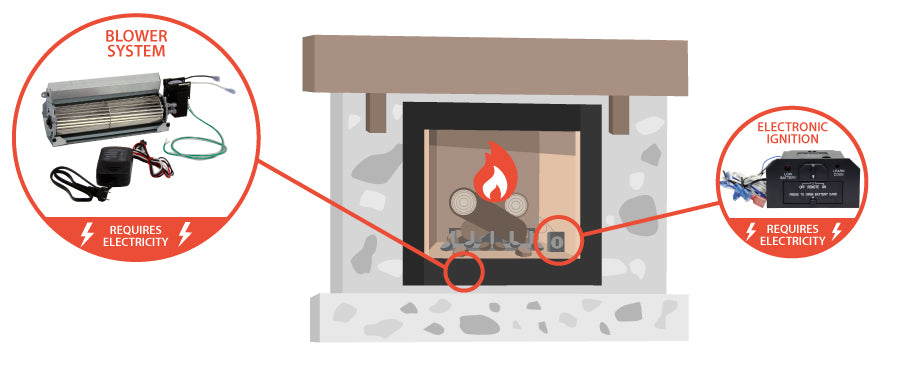
Most direct-vent fireplaces are simply gas-powered and do not require electricity for basic operation. A standing pilot light combined with a simple and reliable millivolt valve system create a safe design. In newer or more advanced direct-vent fireplaces, a source of electricity may be required for features such as blower fans, lights or electronic ignition systems. In addition, most new units feature an Intermittent Pilot Ignition (or IPI) that uses electricity to spark the pilot light and ignite the unit. Then, after use, the pilot shuts down as well to save fuel costs as well as extinguish any standing flame.
How to Install a Direct Vent Fireplace
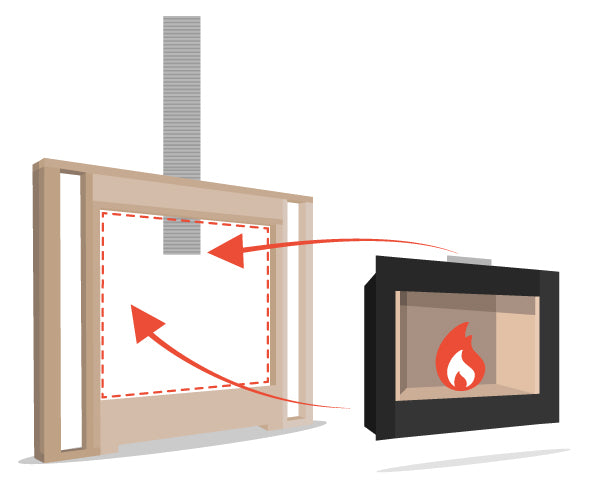
Direct-vent fireplace installations should be done by a trained professional to ensure safe operation. Always check appliance manufacturer information for direct vent configurations. It is important to note every fireplace will have designated venting systems that must be used in order to ensure proper installation. Again, a certified installer will simplify this process, but each fireplace's manual will have specifications and charts covering venting options. While direct-vent systems are simple and straightforward, we know that every installation can have its own variables which can create unique challenges during installation; all the more reason to consult both us and a certified installer.
Are Direct Vent Fireplaces Energy Efficient?
Direct-vent fireplaces are energy efficient for several reasons, namely, they are self-sufficient heating appliances, not drawing air and heat from the room. For this reason, some of these units operate with up to 70 percent efficiency. These fireplaces are also much more efficient than traditional or decorative vented gas logs, which lose the majority of their heat through the chimney.
How Much Does It Cost to Run a Direct Vent Fireplace?

Typically, fireplaces are measured in terms of BTU (British Thermal Units) per hour. Natural gas users are typically billed in therms, which are equal to 100,000 BTU. Knowing this, many direct-vent fireplaces are rated for between 20,000 and 30,000 BTU/hour, which would equate to about 1/5 to 1/3 of a therm for natural gas or gallon of propane.
As of November 2019, data collected from the U.S. government estimates the average cost per therm of natural gas is about $1.06. This puts the cost of using natural gas around 20 to 35 cents per hour. For propane users, propane is typically measured by the gallon, which is about 91,000 BTU total. Again, using data provided by the U.S. government, bulk LP costs about $2.00-$2.50 per gallon measured for 2019. That puts the cost of the fireplace units at 40 to 83 cents per hour.
What are the Benefits of a Direct Vent Fireplace?
Direct vent fireplaces offer a range of benefits that make them a smart choice for modern homes. They can vent through either the roof or a side wall, providing flexible installation options. Because they use outside air for combustion, they don't pull warm air from inside your home, which helps improve heating efficiency and keeps indoor temperatures more consistent. This design also increases safety by reducing the risk of backdrafts or exposure to combustion gases. With better efficiency and safer operation, a direct vent fireplace keeps your home warmer and more comfortable all season long.
Looking to Add a Direct Vent Fireplace to your Home?
Call us today to speak with one of our fireplace experts. They can walk you through the buying process to ensure you find the right product for your home. Contact us for more information.
What is the structural difference between coaxial and collinear direct vent piping?
Coaxial venting utilizes a rigid, dual-wall pipe where the outer channel draws fresh, cold air from outside into the firebox while the inner channel expels hot exhaust gases outdoors. This design preheats incoming air to maximize fuel efficiency. Collinear venting, on the other hand, consists of two separate flexible aluminum or stainless steel lines running side-by-side. Collinear systems are primarily used when installing direct vent inserts into an existing masonry chimney cavity. To select the exact pipe components for your install, check out our Gas Fireplace Venting collection.
Do direct vent gas fireplaces require electricity to heat a room?
No, standard direct vent gas fireplaces equipped with a millivolt standing pilot valve do not require household electricity to ignite or generate heat. The standing pilot heats a thermopile, which generates its own millivolt electrical current to open the gas valve and operate wall switches or wireless Fireplace Remotes. However, optional accessories like convective blower fans, LED accent lights, or advanced Intermittent Pilot Ignition ($IPI$) systems do require a standard 120V electrical connection or battery backup.
Can a direct vent fireplace be vented horizontally through an exterior wall?
Yes. One of the greatest advantages of a direct vent fireplace is its flexible venting pathways. Because these systems utilize natural thermal convection or power-vent assist technology, they can be routed horizontally through an exterior sidewall using a short pipe termination kit, eliminating the need to construct a costly vertical chimney through the roof. To explore zero-clearance framing options for exterior walls, review the technical schematics in our Learning Center.
How much does it cost per hour to run a direct vent gas fireplace?
Operating costs depend on local utility rates and your appliance's BTU rating (typically ranging between 20,000 and 35,000 BTUs per hour). On average, running a natural gas direct vent unit costs approximately $0.30 to $0.55 per hour. Propane configurations typically range between $0.60 and $1.10 per hour. Because these units serve as effective zone heaters, using one to warm your main living area allows you to turn down your primary furnace thermostat, lowering your total monthly utility bills.
What is the difference between a direct vent fireplace and a B-vent (natural vent) fireplace?
A B-vent (natural vent) fireplace draws air directly from inside your room for combustion and relies on natural thermal buoyancy to exhaust gases up a vertical pipe, similar to a traditional chimney. A direct vent fireplace is completely sealed from the room, drawing outside air in and venting exhaust out through a dual-channel pipe. Direct vent models are far more energy efficient, safer against backdrafts, and offer much more flexible installation options. Explore complete replacement systems within our main Gas Fireplaces directory.
Upgrade to High-Efficiency Direct Vent Heating
Choosing a direct vent fireplace is one of the most effective ways to upgrade your home with clean, efficient, and visually stunning zone heating. By sealing the firebox off from your indoor air, utilizing advanced coaxial or collinear venting configurations, and sourcing certified zero-clearance appliances, you can eliminate drafty heat loss while enjoying push-button warmth all winter long. Take the time to measure your wall space, verify your gas supply lines, and select a system that aligns with your household heating goals.
Shop Direct Vent Fireplaces at Fireplaces Direct
Ready to bring cozy, draft-free warmth and modern luxury into your living room? Explore our complete online catalog of top-rated Gas Fireplaces today to find versatile direct vent models in traditional, see-through, and linear styles. From code-approved pipe kits in our Gas Fireplace Venting directory to wireless controllers in our Fireplace Remotes section, Fireplaces Direct has everything you need to complete your setup cleanly. Have a question about wall clearances or pipe sizing? Contact Our Product Experts today for step-by-step guidance!
Frequently Asked Questions
1. Can I open the glass door on a direct vent fireplace while it is running?
No. The ceramic glass panel must remain securely latched and sealed while the unit is in operation. Opening or removing the glass breaks the sealed combustion loop, causing improper draft, severe heat loss, and potential carbon monoxide leakage into your living space.
2. Why does my direct vent fireplace glass develop a cloudy white film?
A cloudy white film on the inner glass face is a normal byproduct of chemical fuel combustion and minerals off-gassing during the first few weeks of operation. It can easily be cleaned off using a non-abrasive gas fireplace glass cleaner once the unit has completely cooled down.
3. Do direct vent fireplaces need a chimney inspection?
While direct vent appliances do not produce heavy creosote like wood stoves, you should still have the venting connections, exterior cap, and gas burner assembly inspected annually by an NFI-certified fireplace technician to clear out dust, cobwebs, or debris.
4. Can I convert a direct vent fireplace from Natural Gas to Liquid Propane?
Yes, provided you use an official factory conversion kit designed specifically for your appliance model. The kit swaps out the burner orifices, pilot hood injectors, and valve regulator springs to handle propane's higher operating pressure safely.
5. How close can furniture sit in front of a direct vent fireplace?
Because the ceramic glass panel radiates intense heat, manufacturers require keeping all combustible items such as couches, rugs, drapes, and wooden furniture at least 36 inches away from the front glass face.
6. Where can I find framing dimensions and clearance requirements for direct vent models?
Detailed framing charts, mantle clearance rules, and pipe routing limits for all major brands are available inside our comprehensive Learning Center.
Key Takeaways
-
Sealed Combustion: The glass-fronted firebox is completely sealed off from room air, drawing intake air from outside and expelling exhaust outdoors to maintain healthy indoor air quality.
-
Coaxial vs. Collinear Venting: Coaxial pipes use a dual-chamber "pipe-within-a-pipe" design for wall or roof penetrations, while collinear double-flexible liners are engineered specifically to retrofit existing masonry chimneys.
-
High Efficiency: Operating at up to 70% thermal efficiency, direct vent systems deliver significantly more heat into your room than traditional open-flue wood fireplaces or vented log sets.
-
Off-Grid Heat Capability: Most direct vent units feature millivolt ignition systems that run independently of household electricity, keeping your family warm during winter power outages.


